Watercolor is a forgiving medium once you understand its core techniques. Here are five that every beginner should practice.
1. Wet-on-Wet
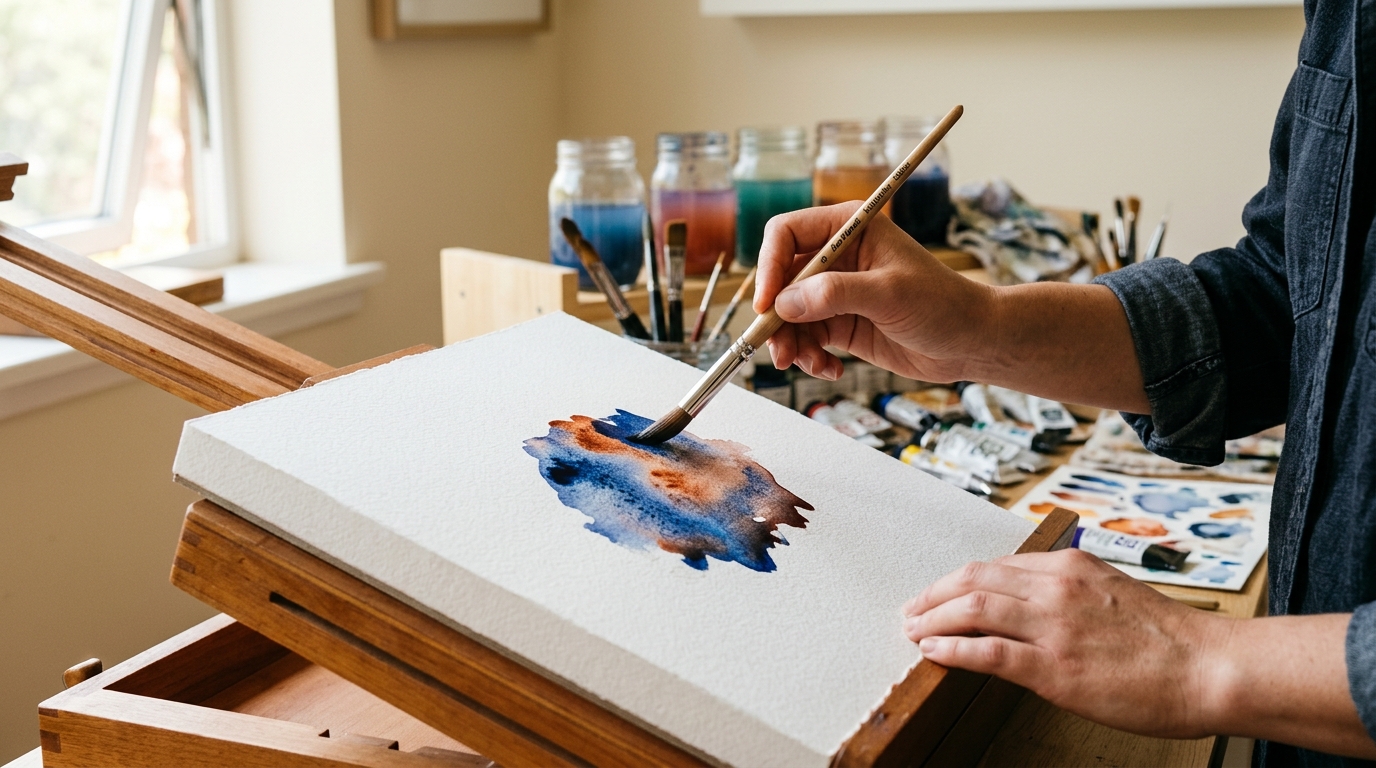
Apply wet paint to wet paper for soft, diffused edges. This technique creates atmospheric backgrounds and gentle gradients. Wet the paper with clean water first, then drop in color and let it spread naturally.
2. Wet-on-Dry
Apply wet paint to dry paper for crisp, controlled edges. This is the standard technique for detailed work and defined shapes. Use cold-press paper for a balance of control and texture.
3. Dry Brush
Load your brush with paint, remove excess moisture, and drag it across textured paper. The paint catches only the raised surface, creating a textured, broken effect ideal for foliage and rough surfaces.
4. Glazing
Apply thin, transparent layers of color over dry paint. Each layer modifies the color beneath without covering it. Build up 3-5 layers for rich, complex colors. Allow each layer to dry completely before adding the next.
5. Lifting
Use a damp brush or clean cloth to lift wet paint from the paper, creating highlights or correcting mistakes. A kneaded eraser can also lift dried watercolor gently.